Introduction
Understanding Cylinder Bore Performance
The performance of a cylinder bore is determined by far more than hardness or smoothness. It is governed by tribology—the science of friction, wear, and lubrication between interacting surfaces in relative motion.
PTWA cylinder bore coatings are designed to function as part of a complete tribological system that includes the piston rings, lubricant, operating temperature, and mechanical load. Understanding how PTWA surfaces behave requires looking beyond appearance and into how the surface supports lubrication throughout the engine’s duty cycle by introducing controlled porosity with plateau honed cylinder bores.

3D printed sample of a plasma spray bore showing porosity in the coating. Digital Metrology
Lubrication Regimes Inside an Engine
Key Factors Influencing Cylinder Bore Dynamics
Within a running engine, the piston rings operate under multiple lubrication regimes as speed, load, and direction change.
At mid-stroke, where piston speed is highest, the rings may operate predominantly in a hydrodynamic or mixed-film lubrication regime. Near top dead center and bottom dead center, however, piston speed approaches zero while load remains high. These regions are dominated by mixed or boundary lubrication, where surface interaction and oil retention are critical.
Cylinder bore surfaces must therefore support lubrication across a wide range of conditions—not just at steady-state cruise, but during cold starts, acceleration, deceleration, and high-load operation.

PTWA Surface Structure at a Functional Level
The Science of Friction and Wear
PTWA coatings are formed by the impact and rapid solidification of molten particles, which build a thin, lamellar coating on the bore surface. After application, the bore is honed to achieve final geometry and surface texture.
The resulting surface is defined by two important features:
First, the honed surface contains controlled grooves that provide directional oil retention, similar in purpose to those found in cast-iron liners and plated bores.
Second, PTWA coatings can contain finely distributed micro-features that are opened during the honing process. When properly controlled, these features act as additional oil reservoirs at the surface rather than defects.
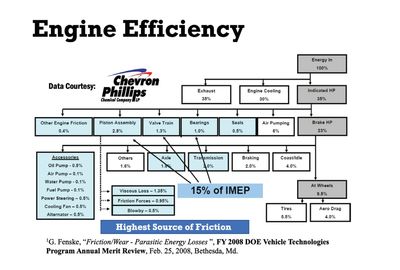
The combination of these features allows the bore to retain oil where it is most needed, particularly in regions of low sliding speed, allowing for reduction in frictional losses resulting in improved performance.
Oil Retention and Friction Behavior
The Importance of Tribology in Engine Design
Published research on PTWA cylinder bores has shown that oil retention is not solely dependent on surface roughness numbers. Instead, it depends on how the surface stores and releases oil during ring motion.
In PTWA coatings, oil can be retained both in the honing grooves and within surface features opened during finishing. These micro-reservoirs can support lubricant availability during boundary and mixed-lubrication conditions, reducing friction and wear during critical portions of the stroke.
This behavior is not unique to PTWA, but PTWA surfaces can be engineered to provide oil storage characteristics comparable to, and in some cases exceeding, traditional liner or plated surfaces when properly finished.

Oxides, Wear Resistance, and Stability
A Deep Dive into Surface Engineering
Iron-based PTWA coatings may contain controlled oxide phases formed during the spraying process. In published studies, these oxides have been shown to contribute to wear resistance and stable friction behavior when distributed appropriately within the coating structure.
As with any cylinder bore technology, the presence and behavior of these phases must be managed through material selection, process control, and finishing. PTWA does not eliminate the need for engineering judgment—it shifts where that judgment is applied.
The end goal remains the same: a stable, predictable interface between the piston rings and the cylinder wall over the intended service life of the engine.
PTWA as a System, Not a Standalone Feature
Optimizing Cylinder Bores for Peak Performance
It is important to emphasize that PTWA performance cannot be evaluated in isolation. Ring material, ring tension, lubricant formulation, surface finish targets, and operating conditions all influence outcomes.
A PTWA cylinder bore that performs well in one application may not be appropriate for another without changes elsewhere in the system. This is true of plated bores, liners, and all other cylinder surface technologies.
Renndienst approaches PTWA as one component within an integrated tribological system, not as a one-size-fits-all solution.

Plateau Honing with Porosity. Digital Metrology
Looking Ahead
From Laboratory Validation to Engine Operation
The tribological behavior of PTWA cylinder bores has been validated through laboratory testing, engine dynamometer work, and vehicle operation across a range of engine platforms.
The next section of this technical library focuses on how PTWA has been applied in engine remanufacturing and bore restoration, including examples where it has enabled the recovery of engine blocks that would otherwise be scrapped.
This overview is based on publicly available research and validation work published by OEMs, academic institutions, and industry organizations, including ASME and SAE technical papers addressing PTWA microstructure, oil retention behavior, friction, and engine testing.
TE77 Ring-Liner Testing. Lake Speed Jr., SPEEDiagnostix.